
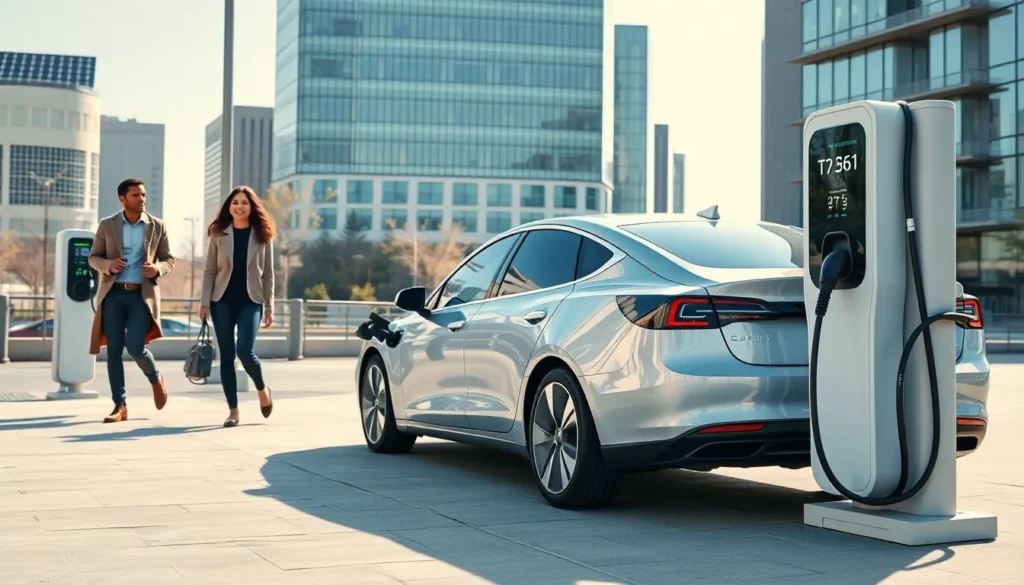
Electric vehicle trends 2026 will reshape how people buy, drive, and charge their cars. The EV market has grown steadily over the past few years, but 2026 promises a significant leap forward. Battery prices continue to drop. Charging networks are expanding. And automakers are finally delivering affordable options alongside premium models.
This year marks a turning point. Electric vehicles are no longer a niche product for early adopters. They’re becoming mainstream transportation. From longer driving ranges to faster charging speeds, the improvements coming in 2026 address the concerns that have held many buyers back. Here’s what drivers can expect from electric vehicle trends 2026.
Table of Contents
ToggleKey Takeaways
- Electric vehicle trends 2026 highlight solid-state batteries delivering 400+ mile ranges and charging times under 20 minutes.
- New EVs priced under $30,000 (before tax credits) make electric vehicles accessible to budget-conscious buyers.
- Electric trucks and SUVs dominate 2026 releases, with models like the F-150 Lightning offering strong towing capacity and 300+ mile ranges.
- Bidirectional charging allows EVs to send power back to the grid, potentially earning homeowners utility credits.
- Level 2+ autonomous driving and over-the-air software updates are now standard on most mid-range and premium electric vehicles.
- The electric vehicle trends 2026 show EVs competing directly on price and convenience, not just environmental benefits.
Advancements in Battery Technology and Charging Infrastructure
Battery technology sits at the heart of every electric vehicle trend in 2026. Manufacturers are rolling out solid-state batteries that offer higher energy density and faster charging times. These batteries can store more power in a smaller package, which means longer ranges without adding weight.
Several automakers have announced vehicles with 400+ mile ranges for 2026 models. That’s a significant jump from the 250-300 mile averages seen just two years ago. The improvement comes from both better battery chemistry and more efficient powertrains.
Charging infrastructure is catching up too. Fast-charging stations now deliver 350 kW or more, cutting charge times to under 20 minutes for many vehicles. Networks like Electrify America, ChargePoint, and Tesla’s Supercharger system (now open to other brands) are adding thousands of new stations across the country.
Home charging is getting smarter as well. Bidirectional charging lets EVs send power back to the grid during peak demand. Some utilities offer credits for this service, turning electric vehicles into mobile energy storage units. This feature appeals to homeowners interested in energy independence and lower electricity bills.
The electric vehicle trends 2026 show clear progress on the two biggest concerns buyers have: range anxiety and charging convenience. Both issues are fading as technology improves.
Affordable EV Options Entering the Market
Price has been a major barrier for EV adoption. That barrier is shrinking in 2026. Several automakers are launching electric vehicles priced under $30,000 before federal tax credits.
Chevy’s next-generation Bolt and similar compact EVs target budget-conscious buyers. Chinese manufacturers entering the US market add competitive pressure that pushes prices down further. These vehicles may lack luxury features, but they deliver reliable electric transportation at accessible price points.
Used EV prices are dropping too. First-generation Teslas, Nissan Leafs, and Chevy Bolts now cost under $15,000 in many markets. Battery degradation concerns have proven overblown for most models, making these used options attractive for second-car buyers.
Leasing deals are improving as well. Monthly payments under $300 are common for base-model electric vehicles. When combined with lower fuel and maintenance costs, the total cost of ownership often beats comparable gas-powered cars.
The federal EV tax credit continues to apply to qualifying vehicles, though eligibility requirements have tightened around domestic manufacturing. Buyers should check current rules before purchasing.
Electric vehicle trends 2026 point toward a market where EVs compete directly on price, not just environmental benefits. This shift will accelerate adoption among mainstream consumers who prioritize value.
The Rise of Electric Trucks and SUVs
Americans love trucks and SUVs. Automakers have noticed. Electric versions of popular truck and SUV models are dominating 2026 releases.
Ford’s F-150 Lightning continues strong sales, while Ram and Chevy have launched competitive electric truck options. These vehicles offer impressive towing capacity and payload ratings that satisfy work-truck requirements. The instant torque from electric motors actually improves towing performance in many scenarios.
Electric SUVs span every price range. Luxury options from BMW, Mercedes, and Rivian compete with affordable choices from Hyundai, Kia, and domestic brands. Families appreciate the lower center of gravity (due to floor-mounted batteries) that improves handling and safety.
The electric vehicle trends 2026 show particular growth in the midsize SUV segment. This category represents the largest share of new car sales in America, so electrification here matters enormously for overall EV adoption.
Range remains strong in these larger vehicles. Many 2026 electric trucks and SUVs exceed 300 miles per charge, with some premium models reaching 400+ miles. Towing does reduce range significantly, but improved charging networks make long-haul trips manageable.
Fleet buyers are adopting electric trucks for delivery and service operations. Lower operating costs and reduced maintenance make financial sense for high-mileage commercial use.
Autonomous Driving Features and Software Integration
Electric vehicles lead the industry in autonomous driving technology. The platform architecture of EVs, with centralized computing and over-the-air updates, supports advanced driver assistance better than traditional vehicles.
Level 2+ autonomy is now standard on most mid-range and premium EVs. These systems handle highway driving, lane changes, and traffic jams with minimal driver input. True hands-free driving on mapped highways is available from several manufacturers.
Software integration extends beyond driving. Voice assistants control climate, navigation, and entertainment. Smartphone apps allow remote preconditioning, charge scheduling, and vehicle monitoring. Some EVs function as mobile offices with video conferencing capabilities.
Over-the-air updates keep improving vehicles after purchase. Tesla pioneered this approach, but every major EV maker now delivers regular software updates. These updates can add features, improve range estimates, and enhance safety systems.
Electric vehicle trends 2026 include deeper integration with smart home systems. EVs can communicate with home energy management, adjusting charge times based on solar production or utility rates. This connectivity transforms EVs from simple transportation into components of broader energy ecosystems.
The data these vehicles collect raises privacy questions. Buyers should review data policies and understand what information manufacturers retain and share.