
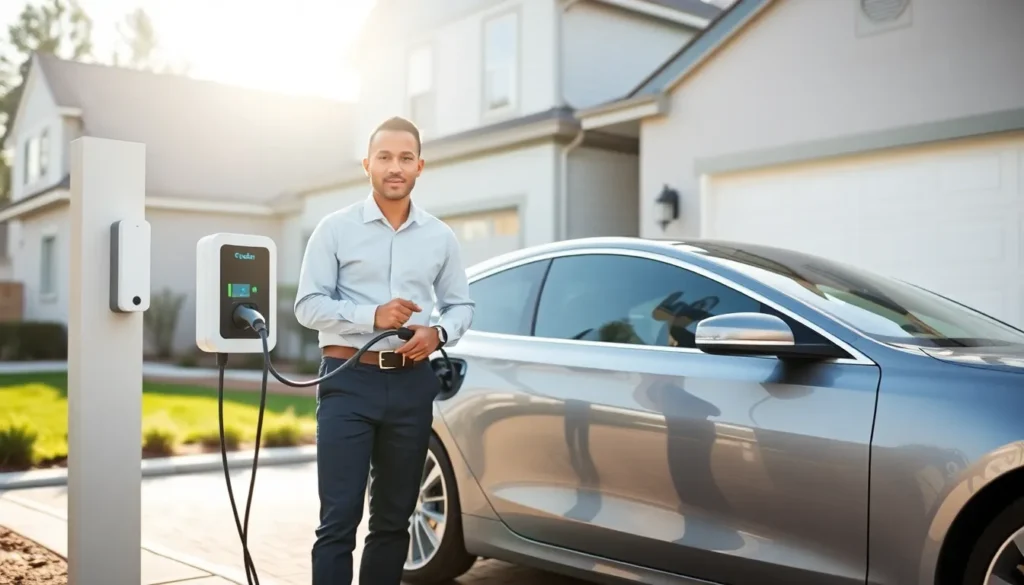
Electric vehicles for beginners can seem confusing at first. New terms, charging options, and battery specs flood the conversation. But here’s the good news: understanding EVs isn’t as complicated as it looks.
This guide breaks down the basics. It covers how electric vehicles work, the different types available, and what new buyers should consider before making a purchase. Whether someone is curious about going electric or ready to buy their first EV, this article provides a clear starting point.
Table of Contents
ToggleKey Takeaways
- Electric vehicles for beginners are easier to understand than they appear—EVs have fewer moving parts, no oil changes, and simpler maintenance than gas cars.
- Three main EV types exist: Battery Electric Vehicles (BEVs) for zero emissions, Plug-in Hybrids (PHEVs) for flexibility, and Hybrids (HEVs) for improved fuel economy.
- EV owners save significantly on operating costs, spending $500–$800 annually on charging compared to $1,500–$2,500 for gasoline.
- Before buying your first electric vehicle, assess your daily driving needs, home charging options, and calculate the total cost of ownership over five years.
- Level 2 home charging (240-volt) is the most practical option for most EV owners, adding 25–30 miles of range per hour for convenient overnight charging.
- Federal tax credits up to $7,500 and state incentives can significantly reduce the upfront cost of purchasing an electric vehicle.
What Is an Electric Vehicle and How Does It Work?
An electric vehicle (EV) uses electricity instead of gasoline to power its motor. The vehicle stores energy in a large battery pack, typically located beneath the floor. When the driver presses the accelerator, the battery sends power to an electric motor, which turns the wheels.
This system is simpler than a traditional gas engine. Electric vehicles have fewer moving parts. There’s no transmission in most EVs, no oil changes, and no exhaust system. The motor converts electrical energy directly into motion with high efficiency.
Regeneration braking adds another clever feature. When the driver slows down, the motor works in reverse. It captures kinetic energy and sends it back to the battery. This process extends driving range and reduces brake wear.
Electric vehicles charge through an external power source. Owners plug their EV into a charging station at home or at public locations. Charging times vary based on the charger type and battery size. Some EVs reach 80% charge in under 30 minutes with fast chargers.
Types of Electric Vehicles Explained
Not all electric vehicles work the same way. The market offers three main categories, each with distinct features.
Battery Electric Vehicles (BEVs)
BEVs run entirely on electricity. They have no gas engine and produce zero tailpipe emissions. Popular examples include the Tesla Model 3, Chevrolet Bolt, and Nissan Leaf. These vehicles typically offer ranges between 200 and 350 miles per charge.
Plug-in Hybrid Electric Vehicles (PHEVs)
PHEVs combine a battery with a gasoline engine. They can travel 20 to 50 miles on electric power alone. After the battery depletes, the gas engine takes over. The Toyota Prius Prime and Ford Escape PHEV fall into this category. PHEVs work well for drivers who want electric commuting but need gas backup for longer trips.
Hybrid Electric Vehicles (HEVs)
HEVs use both electric motors and gas engines, but they can’t plug in. The battery charges through regenerative braking and the gas engine. The Toyota Camry Hybrid and Honda Accord Hybrid are common HEVs. These vehicles improve fuel economy but don’t offer pure electric driving.
Benefits of Owning an Electric Vehicle
Electric vehicles offer several advantages over traditional gas-powered cars.
Lower Operating Costs
Electricity costs less than gasoline in most areas. EV owners spend roughly $500 to $800 per year on charging, compared to $1,500 to $2,500 for gas. Maintenance costs drop too. Electric vehicles skip oil changes, spark plugs, and transmission repairs.
Environmental Impact
Electric vehicles produce zero direct emissions. Even when accounting for power plant emissions, EVs generate fewer greenhouse gases than gas cars over their lifetime. As the electrical grid adds more renewable energy, this advantage grows.
Performance Benefits
Electric motors deliver instant torque. This means quick acceleration from a stop. Many EVs beat comparable gas cars in 0-60 mph tests. The low center of gravity from floor-mounted batteries also improves handling.
Incentives and Tax Credits
Federal and state governments offer financial incentives for EV buyers. The federal tax credit can reach up to $7,500 for qualifying vehicles. Some states add rebates, reduced registration fees, or HOV lane access.
Quieter Driving Experience
Electric vehicles run quietly. No engine noise means a more peaceful cabin. Many EV owners cite this as an unexpected benefit they grow to appreciate.
What to Know Before Buying Your First EV
Purchasing an electric vehicle requires some assignments. A few key factors will shape the decision.
Assess Daily Driving Needs
Most Americans drive fewer than 40 miles per day. Even budget-friendly electric vehicles handle this easily. But buyers should consider their longest regular trips. A 250-mile range covers most situations with room to spare.
Check Home Charging Options
Home charging makes EV ownership convenient. A standard 120-volt outlet (Level 1) adds about 4 miles of range per hour. A 240-volt outlet (Level 2) adds 25 to 30 miles per hour. Most EV owners install Level 2 chargers at home for overnight charging.
Renters or apartment dwellers should check for workplace charging or nearby public stations. Without reliable charging access, EV ownership becomes more challenging.
Research Available Models
The electric vehicle market has expanded rapidly. Options now exist across every segment, sedans, SUVs, trucks, and compact cars. Test drive several models to compare range, features, and driving feel.
Understand Total Cost of Ownership
Electric vehicles often cost more upfront than comparable gas cars. But, lower fuel and maintenance costs close this gap over time. Calculate the total cost over five years, including purchase price, energy costs, and maintenance.
Charging Basics for New EV Owners
Understanding charging options helps new EV owners feel confident.
Level 1 Charging
Level 1 uses a standard household outlet. Every electric vehicle comes with a Level 1 cable. This method works for overnight charging when daily mileage is low. It adds roughly 3 to 5 miles of range per hour.
Level 2 Charging
Level 2 requires a 240-volt outlet or dedicated charging station. Home installation costs between $500 and $2,000 depending on electrical work needed. Public Level 2 chargers appear at shopping centers, workplaces, and parking garages. They deliver 15 to 30 miles of range per hour.
DC Fast Charging
DC fast chargers provide rapid charging for road trips. They can add 100 to 200 miles of range in 30 minutes. These stations appear along highways and in commercial areas. Not all electric vehicles support the same charging speeds, so buyers should check their model’s capabilities.
Charging Networks
Several networks operate public charging stations. Tesla runs its proprietary Supercharger network. Other networks include Electrify America, ChargePoint, and EVgo. Apps like PlugShare help drivers locate available chargers. Most networks require an account or credit card for payment.