
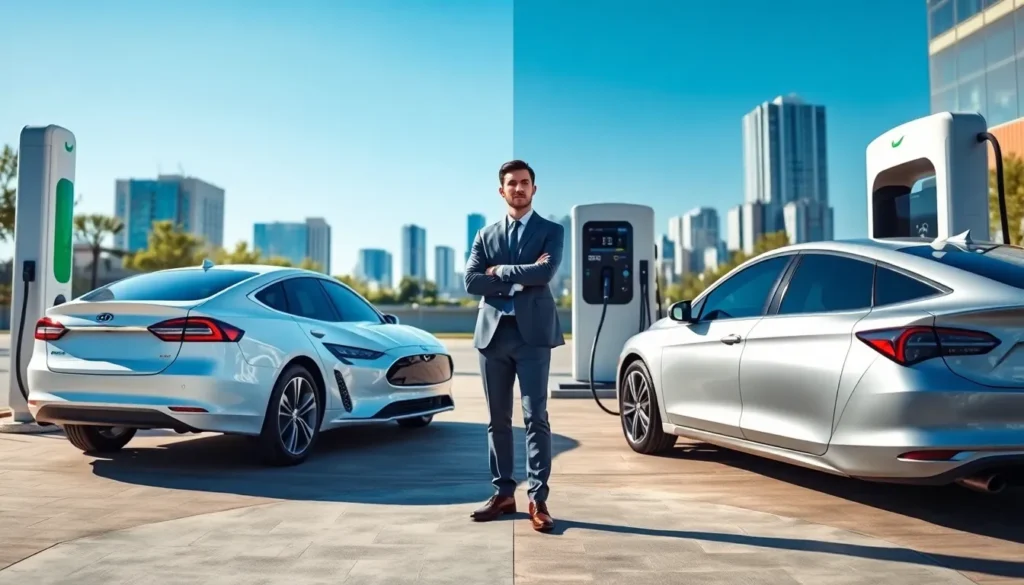
Electric vehicles vs gas cars, it’s a debate that shapes how millions of drivers choose their next vehicle. Both options offer distinct advantages, and the right choice depends on individual priorities like budget, driving habits, and environmental concerns. This comparison breaks down the key differences between electric vehicles and gas-powered cars. From upfront costs to long-term savings, fuel efficiency to charging infrastructure, readers will find the facts they need to make an well-informed choice.
Table of Contents
ToggleKey Takeaways
- Electric vehicles vs gas cars often favor EVs financially over a 10-year ownership period due to lower maintenance and fuel costs.
- EV owners save an average of $4,600 on maintenance and around $800 per year on fuel compared to gas car drivers.
- Electric vehicles produce zero tailpipe emissions and generate fewer lifetime emissions than gas cars, even when factoring in battery production.
- EVs deliver instant torque for quicker acceleration and a quieter, more stable driving experience thanks to low-mounted batteries.
- Gas cars still offer advantages in refueling convenience with 150,000+ stations and 400+ mile range per tank.
- EV charging infrastructure is expanding rapidly, with home charging allowing owners to start each day with a full battery.
Upfront Costs and Long-Term Savings
Electric vehicles typically carry higher sticker prices than comparable gas cars. The average new EV costs around $55,000, while gas vehicles average closer to $48,000. But, federal tax credits of up to $7,500 can close this gap significantly. Many states offer additional incentives that reduce the purchase price even further.
Long-term savings tell a different story. Electric vehicles require less maintenance because they have fewer moving parts. There’s no oil to change, no transmission fluid, and brake pads last longer thanks to regenerative braking. According to Consumer Reports, EV owners save an average of $4,600 on maintenance over a vehicle’s lifetime.
Gas cars have lower upfront costs but higher ongoing expenses. Regular oil changes, transmission services, and exhaust system repairs add up. When comparing electric vehicles vs gas cars over a 10-year ownership period, EVs often come out ahead financially, even though the higher initial investment.
Fuel Efficiency and Operating Expenses
Fuel costs represent a major difference between electric vehicles vs gas cars. Electricity costs less than gasoline in most regions. The average American pays about $0.16 per kilowatt-hour for electricity. Charging an EV at home costs roughly $50 per month for typical driving patterns.
Gas prices fluctuate more dramatically. At $3.50 per gallon, a driver covering 12,000 miles annually in a 30-mpg car spends around $1,400 on fuel. That same distance in an EV costs approximately $600 in electricity, a savings of $800 per year.
Some EV owners pay nothing for fuel. Home solar panels can power a vehicle at zero cost. Public charging stations sometimes offer free charging as an incentive. Gas cars can’t match this flexibility.
Operating expenses extend beyond fuel. Insurance rates for electric vehicles run slightly higher due to repair costs. But lower fuel and maintenance costs usually offset this difference. Overall, electric vehicles vs gas cars favor EVs for budget-conscious drivers who prioritize operating expenses.
Environmental Impact and Emissions
Electric vehicles produce zero tailpipe emissions. This makes them cleaner in urban areas where air quality matters most. Gas cars emit carbon dioxide, nitrogen oxides, and particulate matter that contribute to smog and health problems.
The full environmental picture includes manufacturing and electricity generation. EV batteries require mining for lithium, cobalt, and nickel. This process has environmental costs. But, studies from the EPA and MIT show that electric vehicles still produce fewer lifetime emissions than gas cars, even when accounting for battery production.
The electricity grid is getting cleaner each year. Renewable energy sources now provide over 20% of U.S. electricity. As this percentage grows, the environmental advantage of electric vehicles vs gas cars increases.
Gas cars will always burn fossil fuels. Their emissions remain constant throughout their lifespan. Electric vehicles improve as the grid improves. For buyers who prioritize environmental impact, EVs offer clear benefits today and even greater benefits in the future.
Performance and Driving Experience
Electric vehicles deliver instant torque. This means quick acceleration from a standstill. Many EVs beat sports cars in 0-60 mph times. The Tesla Model S Plaid reaches 60 mph in under 2 seconds, faster than most supercars.
Gas cars require engines to build RPMs before delivering peak power. This creates a different driving feel. Some enthusiasts prefer the sound and sensation of a revving engine. It’s a matter of personal preference.
Electric vehicles vs gas cars also differ in handling. EV batteries sit low in the chassis, which lowers the center of gravity. This improves stability and cornering. Many drivers report that EVs feel more planted on the road.
Noise levels favor electric vehicles. They operate quietly at all speeds. Gas cars produce engine noise, exhaust sounds, and vibrations. For daily commutes, the silent EV experience reduces fatigue.
Range anxiety remains a concern for some EV shoppers. Most modern electric vehicles travel 250-350 miles on a single charge. Gas cars can refuel in minutes and travel 400+ miles per tank. For long road trips, gas cars still offer convenience advantages.
Charging Infrastructure vs Gas Stations
The United States has over 150,000 gas stations. Drivers can refuel anywhere in minutes. This convenience remains a strong advantage for gas cars.
EV charging infrastructure is expanding rapidly. Over 60,000 public charging stations now operate across the country. Tesla’s Supercharger network covers major highways and urban areas. Other networks like Electrify America and ChargePoint continue adding locations.
Home charging changes the equation for electric vehicles vs gas cars. EV owners can charge overnight in their garage. They wake up to a full “tank” every morning. Gas car owners must make separate trips to fuel stations.
Fast charging technology is improving. DC fast chargers can add 200 miles of range in 20-30 minutes. This makes long-distance travel more practical. By 2030, charging networks are expected to triple in size.
Apartment dwellers and those without home charging face more challenges. Workplace charging and public stations can fill this gap, but availability varies by location. When comparing electric vehicles vs gas cars, infrastructure remains a factor, though the gap is closing quickly.